From Overwhelmed to Supported: ADL Assist in Small Assisted Living Homes
Business Name: BeeHive Homes of Gallup
Address: 600 Gurley Ave, Gallup, NM 87301
Phone: (505) 591-7024
BeeHive Homes of Gallup
Beehive Homes of Gallup assisted living care is ideal for those who value their independence but require help with some of the activities of daily living. Residents enjoy 24-hour support, private bedrooms with baths, medication monitoring, home-cooked meals, housekeeping and laundry services, social activities and outings, and daily physical and mental exercise opportunities. Beehive Homes memory care services accommodates the growing number of seniors affected by memory loss and dementia. Beehive Homes offers respite (short-term) care for your loved one should the need arise. Whether help is needed after a surgery or illness, for vacation coverage, or just a break from the routine, respite care provides you peace of mind for any length of stay.
600 Gurley Ave, Gallup, NM 87301
Business Hours
Families generally start inquiring about assisted living after a series of small crises. A fall in the bathroom. A pot left on the range. Medications mixed up again. What looked like "a little forgetfulness" or "simply slowing down" ends up being something else: an everyday scramble to keep a parent safe, dignified, and as independent as possible.
At the center of all of this are the activities of daily living, or ADLs. How a home supports those fundamental jobs typically matters more than the décor, the menu, and even the cost. This is especially real in small assisted living houses, where the scale, staffing, and culture feel really various from large senior care communities.
I have watched households move from fatigue and guilt to authentic relief when they find the right match. The turning point is almost always the same: they finally feel supported, not alone, in the work of daily care.
This article looks closely at what ADL aid really indicates in a small setting, how it alters the experience of elderly care, and what to look for if you are thinking about a move or a short-term respite stay.
What ADL support actually covers
Professionals in some cases forget how foreign the term "ADLs" sounds to families. In practice, it merely suggests the core tasks a person needs to manage every day without putting health or security at risk.
Most assisted living and elderly care groups focus on a familiar group of ADLs:
- Bathing and showering
- Dressing and grooming
- Toileting and continence
- Transferring and mobility (getting in and out of bed or a chair, strolling securely)
- Eating, consisting of set-up and sometimes feeding
Around those basics sit the "instrumental" activities like managing medications, cooking, house cleaning, laundry, dealing with finances, and transportation. Technically these are IADLs, however in most real-life senior care settings, families speak about everything together: "Mom simply can't manage the household" or "Dad is great physically however unsafe with pills and bills."
Good ADL assistance in assisted living is not almost job conclusion. It integrates safety, efficiency, respect, and flexibility. For instance:
A resident may be physically able to dress however takes an hour to pick clothing and tires midway through. In a small house, a caregiver who knows her may set out two attire choices the night previously, then return in the morning to aid with buttons, stockings, and shoes. She still chooses. She participates. The assistance is quiet and woven into her typical routine.
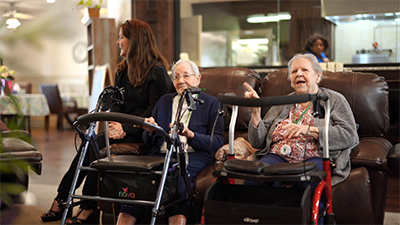
That mix of aid and self-reliance is where quality of life lives.
Why the size of the house matters
Small assisted living residences, often called "board and care homes," "RCFEs" in some states, or just small homes, generally home between 4 and 16 locals. The precise number differs by state guideline. The key difference is scale.
In a structure of 80 or 120 citizens, policies, staffing patterns, and workflows have to serve lots of people at the same time. That can work well for active older grownups who need very little aid. As soon as ADL assistance becomes central, the experience changes.
In small settings, three factors usually stand out.
First, staff familiarity. When a caretaker works with the very same 6 to 10 citizens day after day, subtle modifications are obvious. They see when somebody begins having problem with their walker, when arthritis stiffens hands enough to make buttons hard, or when a generally talkative resident unexpectedly withdraws. That early notification matters for both security and dignity.
Second, versatility of regimens. Big neighborhoods frequently need repaired shower days or dressing schedules merely to cover everybody. In a small residence, there is frequently more room to change. Early birds can bathe at 6:30 a.m. If that is their long-lasting routine. Night owls can oversleep and still receive calm help getting ready.
Third, psychological climate. ADL care requires trust. Having two or 3 familiar caregivers rotate through, rather of a long parade of brand-new faces, makes it simpler for locals to accept intimate help such as bathing or toileting. Families often report that their relative becomes less resistant once they know and rely on the staff.
None of this implies that every small home is ideal, nor that large assisted living can not supply outstanding care. It indicates that the structure of a small house naturally supports a specific style of senior care: relationship-based, watchful, and often more customized to private rhythms.
Moving from "providing for" to "supporting with"
One of the most significant shifts for families occurs not in the physical relocation, but in mindset.
At home, adult kids and partners are under pressure. They frequently rush through tasks, "providing for" the older adult simply to get it done. Morning regimens can feel like a race: get him to the restroom, get clothes on, get breakfast made, rush to work. There is little space for the person's rate or preferences.
In a well-run small assisted living residence, the group has a various starting point. Their job is not just to get somebody showered. Their job is to help that person remain as capable, confident, and comfortable as possible.
A caregiver might:
- Encourage the resident to clean their face and upper body, while helping with hard-to-reach places.
- Offer a shower chair and portable sprayer, so balance problems do not end up being a barrier.
- Use warm towels, preferred soap scents, and soft background music if the person is anxious about bathing.
These are not luxuries. They straight influence how most likely a resident is to accept help, and how much independence they keep month to month.
Families in some cases fret that "excessive aid" will trigger decline. The genuine threat is the wrong type of assistance, provided in a rushed or managing method. In small elderly care homes, personnel can watch thoroughly: when to hint, when merely to wait for safety, and when to action in fully.
The finest question to ask a supplier about ADLs is not "Do you assist with bathing?" but "How do you assist, and how do you decide when to step in or go back?"
A day in a small assisted living residence, through the lens of ADLs
To see how this operates in practice, imagine a typical day for a resident called Helen.
Helen is 87, with moderate arthritis and mild memory loss. She moved from her child's home after a number of falls and one frightening night of roaming. Before the relocation, her daughter was aiding with almost every ADL on top of raising two teenagers and working full-time.
Morning: A caretaker knocks on Helen's door around her preferred wake time. Instead of turning on all the lights and pulling off the blanket, they begin carefully: "Good early morning, Helen. Are you ready to get up, or would you like a few more minutes?" That small regard sets the tone.
Transferring and toileting: The caregiver positions a gait belt, helps Helen stay up on the edge of the bed, then stands by as she utilizes her walker to reach the bathroom. They guide without gripping too tightly, prepared to support if she wobbles. On the toilet, the caregiver steps out of direct view however stays close adequate to aid with clothes and health as needed.
Bathing and grooming: On set up shower days, the bathroom is prepared ahead of time, with non-slip mats, a shower chair, and the water set to her favored temperature level. On other days, a partial sponge bath at the sink may be enough. The caregiver sets out her hairbrush, denture cup, and face cream simply as she used to do at home.
Dressing: Instead of simply dressing Helen, personnel set out weather-appropriate clothes and ask which blouse she chooses. They assist with the more difficult pieces - bra hooks, compression stockings, shoes - and let her handle what she can. This takes longer than doing everything for her, but it keeps her brain and body engaged.
Meals: At breakfast, Helen discovers her location already set with utensils that are much easier to grip. Staff notification if she has problem cutting food and silently step in. They focus on chewing and swallowing, to make certain nothing about her health or medications has actually changed.

Mobility and activities: Throughout the day, caregivers provide a steadying hand when she stands, motivate brief strolls in the corridor for exercise, and trigger her to participate in simple activities. Motion is woven into typical life, not delegated a weekly "exercise class."
Evening: As bedtime approaches, personnel cue Helen to change into nightclothes and help where arthritis makes it hard to bend or reach. They look for incontinence items, ensure pathways are clear, and guarantee her call system is within reach.
None of these tasks are significant. What makes them effective is consistency. When provided diligently, day after day, they prevent small issues from ending up being big ones.
How respite care suits the picture
Respite care in a small assisted living house can be a bridge between overwhelmed household caregiving and a long-term move. It provides everybody a possibility to experience how ADL assistance works in that setting.
Families frequently use respite for three primary reasons.
First, to recuperate. A primary caretaker who has actually been supplying day-and-night elderly care is often physically and mentally invested. A week or a month of respite can enable correct sleep, medical appointments, or perhaps a brief trip without the consistent fear of "what if something happens while I am gone."
Second, to examine fit. A short stay lets you see how your relative reacts to the environment. Do they seem more unwinded with regular help? Do they eat better when meals appear on a schedule? Are they calmer with a predictable regular and fewer family demands?
Third, to test the care level. You can see how personnel deal with ADLs in genuine time, not just in the sales brochure. For example, how patiently do they help with toileting at 2 a.m.? Is the very same caregiver often present, or is there continuous turnover? How do they respond if your relative declines a shower or becomes agitated?
Respite can also clarify needs. Families in some cases find that the person needs more assistance than they understood, or in various locations than they expected. For example, a parent who "just requires assist with bathing" may in fact fight with sequencing the actions of dressing, or with safe transfers from recliner to wheelchair.
Handled well, respite care is less about "positioning" a loved one and more about forming a collaboration. It is a trial run for shared care, where household and personnel discover how to support the exact same person in complementary ways.
The emotional side of accepting ADL help
ADL assistance is intimate. It touches self-respect, identity, and long-formed habits. Accepting help with bathing or toileting can feel like a loss of the adult years, especially for somebody who has actually invested decades in a caregiving role themselves.
Small homes often have an advantage here, since relationships develop quickly. When the same caretaker helps with breakfast every morning, jokes about the weather condition, remembers grandchildren's names, and understands precisely how someone likes their coffee, the leap to accepting aid in the restroom ends up being smaller.
Still, resistance is common. I have actually seen several patterns:
Residents who strongly value modesty might refuse showers, yet accept aid with hair washing at the sink.
Those with early dementia might insist "I already showered" when they have not. Arguing escalates things. Non-confrontational techniques work better: "Let's freshen up before lunch" or "Your daughter is stopping by later, let's get ready so you feel comfortable."
Proud people may bristle at the word "help" however endure "support" or "standby." The language matters.
Caregivers in small homes have the time to learn these subtleties. They see what works, share techniques with coworkers, and change. In time, resistance frequently softens as homeowners feel safe and reputable rather than managed.
Families can support this process by framing the relocation and the assistance as an upgrade in comfort, not a demotion. For example, "You have people here whose job is to make your early mornings simpler. Let them spoil you a bit."
Balancing independence and safety
A core tension in assisted living, specifically around ADLs, is where to draw the line in between letting someone do jobs their own method and stepping in to avoid harm.
In small houses, choices typically boil down to 3 guiding concerns:
Is the resident familiar with the risk?
Are they efficient in comprehending the consequences?
Does their choice put others at danger, or only themselves?
For example, someone with moderate balance problems who insists on standing to brush teeth might be permitted to do so, with a caretaker nearby and grab bars installed. If that exact same person demands walking unassisted on a slippery deck after rain, staff may draw a firmer boundary.
Families sometimes battle when the home allows a level of danger they themselves would not have at home. The objective is not zero threat, which is difficult, however acceptable risk that preserves self-respect and autonomy.
A thoughtful small assisted living group will record these decisions, communicate them plainly, and revisit them often. As health modifications, the balance shifts. That is regular. What matters is that modifications in ADL support are elderly care not driven exclusively by convenience, however by thoughtful assessment.
What to ask when examining a small assisted living residence
Families visiting small senior care homes frequently focus on appearances: Is it tidy? Does it smell all right? Do locals seem material? These are very important, but for ADLs you require much deeper insight.
Here are useful questions that expose how a home genuinely manages everyday care:
- How many residents are here, and how many caretakers are on each shift, including overnight?
- Can you stroll me through a normal morning for somebody who needs assist with bathing and dressing?
- Who does the assessments for ADL needs, and how frequently are they updated?
- How do you manage a resident who declines care such as showers or medications?
- What changes in care or expense ought to I anticipate if my loved one's ADL needs increase?
Listen less to the sales pitch and more to the specifics. An administrator who can respond to with comprehensive examples, instead of basic guarantees, generally runs a more organized and mindful program.
If possible, ask to visit throughout a hectic time: early morning or night. Peaceful mid-afternoon tours can hide staffing gaps that just reveal throughout peak ADL support hours.
When needs modification over time
Assisted living is frequently provided as a repaired level of care, but in practice, ADL requires shift. Arthritis aggravates. Cognition declines. A stroke or hospitalization resets functional capability overnight.
Small homes vary extensively in how far they can go. Some are licensed only for light assistance and needs to release locals who end up being non-ambulatory or fully dependent. Others have the ability to handle greater levels of elderly care, consisting of extensive ADL support and hospice coordination, as long as needs stay within their license and staffing capabilities.
Families need to clarify:
What are the "deal breakers" that would require a move? Complete two-person transfers? Particular medical devices? Serious behavioral issues?
How do they communicate increasing requirements and associated cost changes?
Can outside home health, treatment, or hospice services can be found in to support more intricate care?
Knowing these borders early prevents unexpected, painful transitions later. It likewise clarifies the length of time a small assisted living house may be a feasible home and partner in care.
When family caregivers lastly feel supported
One daughter put it bluntly after her father's first month in a small assisted living home: "I am still his daughter, but I am no longer his nurse, his housemaid, and his bodyguard."
That is the shift that ADL aid in the ideal setting can bring.
At home, she had actually been managing his incontinence items, raising him from bed, coaxing him into the shower, tracking medications, cooking low-salt meals, and staying half-awake every night listening for falls. She liked him, however she was burning out, and animosity had started to shadow their conversations.
In the small house, caretakers handled the physical side of his daily life. She visited as his child once again. They reminisced, saw sports, argued about politics, and laughed. She might leave at the end of a visit without a wave of fear about what may happen when she was not there.
The father, devoid of feeling like a problem in his child's home, unwinded. He enjoyed having other people around at mealtimes, and he grew close to one night-shift caregiver who shared his interest in jazz.
That kind of result is not automatic. It depends greatly on the particular home, the training and stability of staff, and the match between resident needs and the house's abilities. But when it works, the effect reaches far beyond the checklists of ADLs and into the psychological lives of entire families.
Final ideas for families at the crossroads
If you are considering a small assisted living house for a parent or partner, begin with three core reflections.
First, be truthful about existing ADL requirements. Document just how much hands-on help your relative really requires across a regular day, consisting of nights. Different the perfect from what is truly taking place. That clarity will prevent underestimating the level of assistance needed.
Second, think of the kind of environment your relative thrives in. Some individuals do best with the energy of a large neighborhood and lots of activity alternatives. Others choose the calm, family-like rhythm of a small home where staff and residents know each other intimately.
Third, acknowledge your own limits. Love is not a limitless resource. Neither is energy. Moving from overwhelmed to supported is not a failure. It can be a wise modification, one that honors both the older grownup's needs and the caregiver's humanity.
ADL assistance in a small assisted living house is not merely a set of services. Done well, it is a day-to-day practice of seeing, adjusting, and appreciating. It can turn standard care jobs into a framework for security, independence, and connection throughout the last chapters of an individual's life.
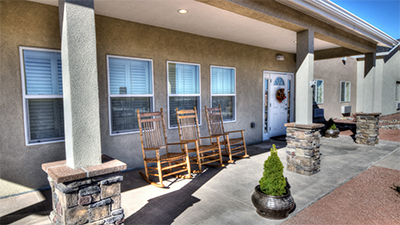
BeeHive Homes of Gallup provides assisted living care
BeeHive Homes of Gallup provides memory care services
BeeHive Homes of Gallup provides respite care services
BeeHive Homes of Gallup supports assistance with bathing and grooming
BeeHive Homes of Gallup offers private bedrooms with private bathrooms
BeeHive Homes of Gallup provides medication monitoring and documentation
BeeHive Homes of Gallup serves dietitian-approved meals
BeeHive Homes of Gallup provides housekeeping services
BeeHive Homes of Gallup provides laundry services
BeeHive Homes of Gallup offers community dining and social engagement activities
BeeHive Homes of Gallup features life enrichment activities
BeeHive Homes of Gallup supports personal care assistance during meals and daily routines
BeeHive Homes of Gallup promotes frequent physical and mental exercise opportunities
BeeHive Homes of Gallup provides a home-like residential environment
BeeHive Homes of Gallup creates customized care plans as residents’ needs change
BeeHive Homes of Gallup assesses individual resident care needs
BeeHive Homes of Gallup accepts private pay and long-term care insurance
BeeHive Homes of Gallup assists qualified veterans with Aid and Attendance benefits
BeeHive Homes of Gallup encourages meaningful resident-to-staff relationships
BeeHive Homes of Gallup delivers compassionate, attentive senior care focused on dignity and comfort
BeeHive Homes of Gallup has a phone number of (505) 591-7024
BeeHive Homes of Gallup has an address of 600 Gurley Ave, Gallup, NM 87301
BeeHive Homes of Gallup has a website https://beehivehomes.com/locations/gallup/
BeeHive Homes of Gallup has Google Maps listing https://maps.app.goo.gl/iMEbZo7VyH1tHATP9
BeeHive Homes of Gallup has TikTok page https://www.tiktok.com/@beehivehomesgallup
BeeHive Homes of Gallup has an YouTube page https://www.youtube.com/@WelcomeHomeBeeHiveHomes
BeeHive Homes of Gallup has Facebook page https://www.facebook.com/beehivehomesgallup
BeeHive Homes of Gallup has Instagram page https://www.instagram.com/beehivehomesofgallup/
BeeHive Homes of Gallup won Top Assisted Living Homes 2025
BeeHive Homes of Gallup earned Best Customer Service Award 2024
BeeHive Homes of Gallup placed 1st for Senior Living Communities 2025
People Also Ask about BeeHive Homes of Gallup
What is BeeHive Homes of Gallup Living monthly room rate?
The rate depends on the level of care that is needed. We do a pre-admission evaluation for each resident to determine the level of care needed. The monthly rate is based on this evaluation. There are no hidden costs or fees
Can residents stay in BeeHive Homes of Gallup until the end of their life?
Usually yes. There are exceptions, such as when there are safety issues with the resident, or they need 24 hour skilled nursing services
Do we have a nurse on staff?
No, but each BeeHive Home has a consulting Nurse available 24 – 7. if nursing services are needed, a doctor can order home health to come into the home
What are BeeHive Homes of Gallup's visiting hours?
Our visiting hours are currently under restriction by the state health officials. Limited visitation is still allowed but must be scheduled during regular business hours. Please contact us for additional and up-to-date information about visitation
Do we have couple’s rooms available?
Yes, each home has rooms designed to accommodate couples. Please ask about the availability of these rooms
Where is BeeHive Homes of Gallup located?
BeeHive Homes of Gallup is conveniently located at 600 Gurley Ave, Gallup, NM 87301. You can easily find directions on Google Maps or call at (505) 591-7024 Monday through Sunday 9:00am to 5:00pm
How can I contact BeeHive Homes of Gallup?
You can contact BeeHive Homes of Gallup by phone at: (505) 591-7024, visit their website at https://beehivehomes.com/locations/gallup/ or connect on social media via TikTok Facebook or YouTube
Ford Canyon/Veterans Park provides walking paths and scenic canyon views suitable for assisted living and elderly care residents during calm respite care outings.